The Imperial Danube
Explore the Danube's many wonders, from Passau and the vineyard-lined Wachau Valley to Vienna and Budapest. Cruise the magnificent Iron Gates and savour authentic local culture with a home-cooked meal in rural Croatia.
- Package Details
- Itinerary
- Terms and Conditions
BOOK BY 31 OCTOBER 2026 FOR THESE EXCLUSIVE SAVINGS!
EXPLORE THE DANUBE RIVER WITH UNIWORLD
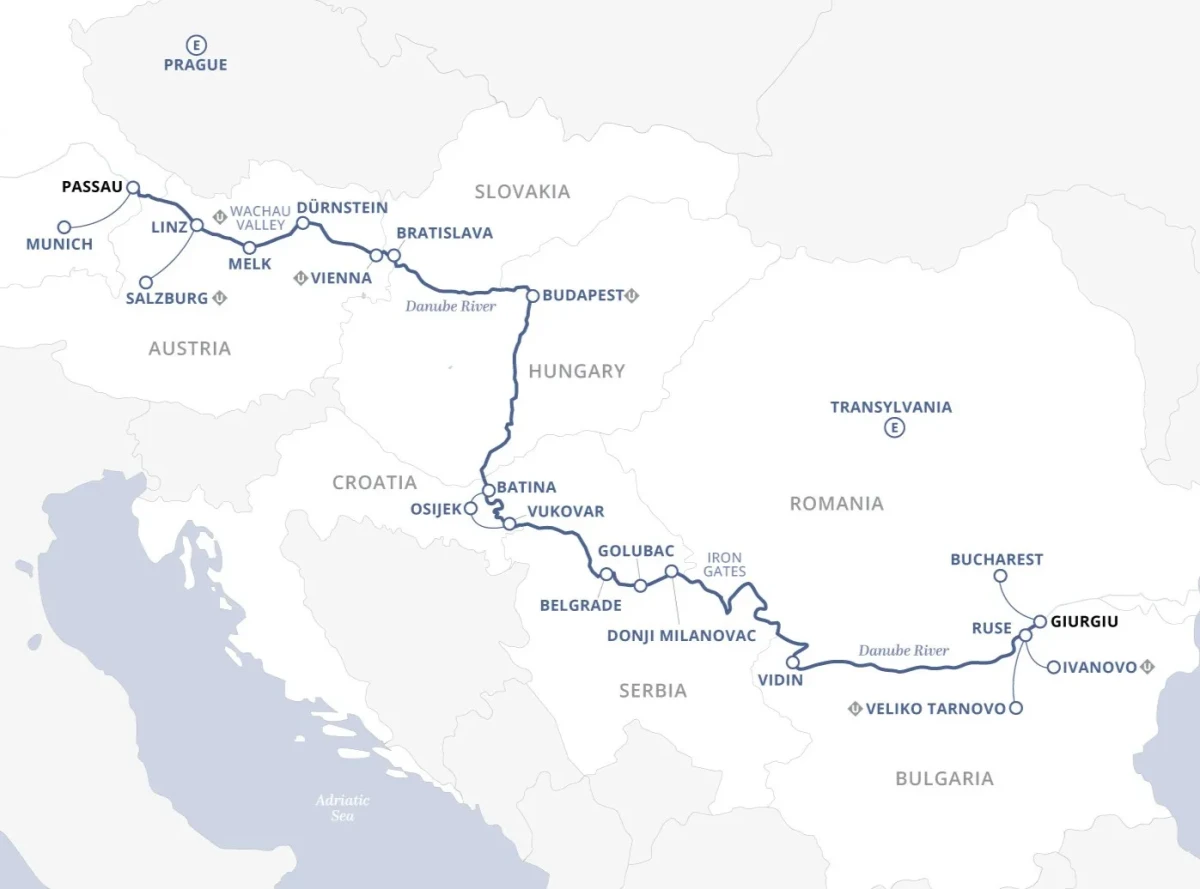
Discover the grandeur of the Danube aboard S.S. Marlene on an elegant river journey from Bucharest to Passau. From Romania and Bulgaria to Serbia, Croatia, Hungary, Austria and Germany, uncover magnificent capitals, medieval towns and picturesque riverside landscapes. Enjoy extended stays in Budapest and Vienna, explore historic gems such as Belgrade, Bratislava and Durnstein, and venture to Salzburg and Melk. With refined comfort, captivating scenery and a wealth of European culture, this is the Danube at its most enchanting.
Package Inclusions:
- Return economy class flights from Australia* to Bucharest, with your return journey from Munich
- Looking for more comfort? Ask us about upgrades to Premium Economy or Business Class.
- Want to explore more of Europe? We can help you extend your stay and customise your journey. - Date: 22-24 October 2027 at The Marmorosch Bucharest or similar
Welcome to Bucharest, where the hotel is selected exquisitely by UNIWORLD
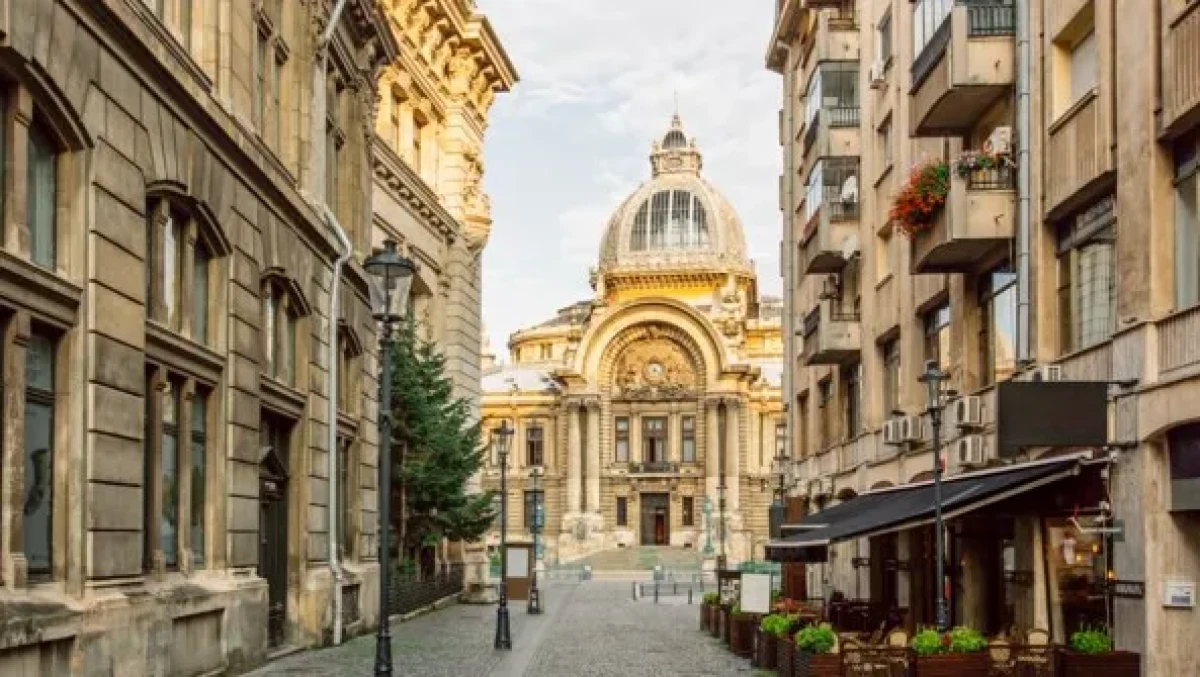
Bucharest blends grand architecture and fascinating history. Explore the Palace of Parliament, wander the charming Old Town and admire the elegant Romanian Athenaeum before enjoying traditional Romanian cuisine and lively cafe culture. - Date: 24 October-07 November 2027, 14 nights Giurgiu to Passau
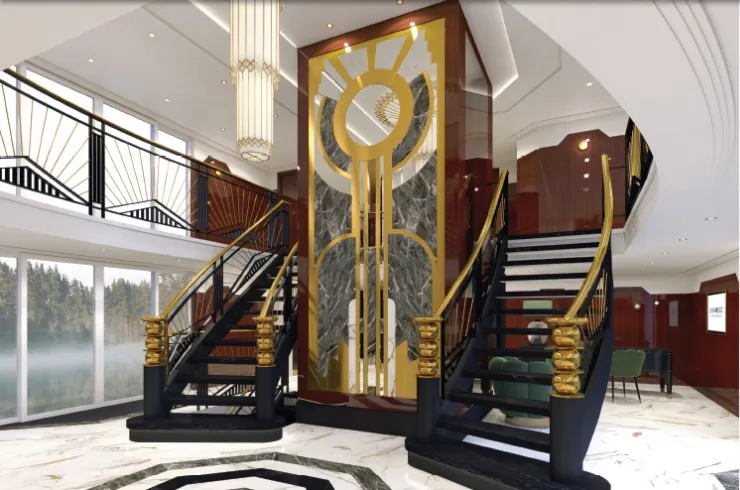
14 nights in a Riverview stateroom on the magical S.S. Marlene
Become an expert on the Danube River's many wonders as you admire the swirling colors of Passau's famous confluence, pedal past the vineyard-lined banks of the Wachau Valley, and listen to the melodic sounds of "The Blue Danube" waltz echo through a historic Viennese concert hall during a private evening of classical music arranged just for Uniworld guests. Continue on to explore the UNESCO-designated architecture of Budapest, cruise through the magnificent Iron Gates, and enjoy a homecooked meal with a local family in rural Croatia. .
EXPERIENCES
- 8 countries: Austria, Bulgaria, Croatia, Germany, Hungary, Romania, Serbia, Slovakia
- 6 UNESCO World Heritage sites
- Captivating onboard local entertainment
- Cultural enrichment
- Services of an experienced Uniworld Cruise Manager
- Gratuities for onboard personnel (ship staff, crew, Cruise/Tour Manager) are included during the cruise/tour - - All meals onboard, prepared using the finest and freshest ingredients
- 16 breakfasts, 12 lunches, 14 dinners
- 2 Captain's Welcome and 2 Captain's Farewell Receptions
- 2 Welcome and 2 Farewell Gala Dinners
- Unlimited beverages onboard, including fine wine, beer, spirits, specialty coffee and tea, soft drinks, and mineral water
- 13 days of excursions, all fully hosted by English-speaking local experts- see itinerary for details
- Guided "Let's Go" programmes
- State-of-the-art Quietvox portable audio-headset system on all excursions
- Brompton G-Line Bicycles and Nordic Walking sticks available for independent exploration
- Free Wi-Fi - All transfers are pre-arranged for a smooth and stress-free journey.
22 October 2027 - Bucharest airport to hotel
24 October 2027 - Bucharest hotel to Giurgiu pier
07 November 2027 - Passau pier to Munich airport
Itinerary
Day 1 Bucharest, Romania
Arrive at Bucharest Henri Coanda International Airport. On arrival a private transfer will take you to your hotel
Day 2 Bucharest, Romania
Get to know the bustling heart of Romania's capital city with a full day to explore Bucharest on your own.
Day 3 Giurgiu, Romania
Bucharest is a fascinating combination of Communist grandiosity, elegant French-influenced 19th-century buildings and surprising survivors dating from the 1500s. Today in Bucharest you'll enjoy a panoramic city tour and a visit to People's Palace. Later, you'll travel via motorcoach to Giurgiu, where your ship awaits. In the evening, a special Captain's Welcome Reception and Dinner will be prepared for you.
Included excursions designed to enhance your journey
Bucharest Communist Tour with People's Palace
Bucharest began as a fortress in the 15th century, a warlike origin that set the tone for its turbulent history. It saw glory days as the summer residence of the Wallachian princes and was burned to the ground by the Ottoman Turks; then Austria-Hungary and imperial Russia fought over it for a century. After Wallachia and Moldavia united to form Romania in the mid-19th century, Bucharest enjoyed a prosperity that was reflected in its extravagant architecture, some of which miraculously survived WWII bombing and Communist building programs. You'll see Bucharest's very own Triumphal Arch, which is modeled after the Arc de Triomphe in Paris, and Victoria Boulevard, lined with chic shops and handsomely restored pre-war buildings-and sites where protests brought down Ceausescu's regime in 1989. These days Bucharest enjoys a lively and eclectic cultural scene, hosting international arts festivals and concerts, and a measure of prosperity apparent in its busy cafes and thriving street life. For the most dazzling stop of the day, you'll visit the colossal People's Palace, the second largest office building in the world. It's certainly one of the grandest as well, filled with crystal chandeliers, mosaics, marble, gold leaf, and stained-glass windows. A remnant of the city's communist history, the building's original design took a team of approximately 700 architects and was inspired by Socialist Realism, Modernism, and Neoclassical architecture. Though the People's Palace was ordered by Nicolae Ceausescu, the last communist leader of Romania, it was not completed until 8 years after his death. The Palace now houses the Romanian Parliament and three museums, including a contemporary art museum and the Museum of Communist Totalitarianism.
Day 4 Ruse, Bulgaria
Bulgaria's foremost Danube port, Ruse is sometimes called "Little Vienna" for its elegant 19th-century mansions and public buildings.
Select your choice of these carefully curated excursions, which operate at the same time.
Veliko Tarnovo and Arbanassi with Authentic Bulgarian Lunch
Twice the capital of Bulgaria-before and after the Ottomans conquered the nation-Veliko Tarnovo climbs steep hills above the Yantra River, topped by the ruins of Tsarevets, the stronghold where Bulgaria's kings ruled between 1185 and 1393. The remains of the great stone walls and towers that you see formed the historic heart of the Second Bulgarian Empire. History lives in this town, as a quick look at the wares for sale in Samovod Marketplace will show you: Handicrafts are all made by local artisans using ancient, medieval, or Renaissance technologies. You'll have time to peruse the exceptional local pottery and textiles there before heading to Arbanassi, home to six amazing 17th-century stone churches, each one decorated with colorful and intricate frescoes. Learn something of the multicultural history of this fascinating town at the Ethnographic Museum and visit the UNESCO-designated Nativity Church, where murals of the Nativity, the Last Judgment, and the zodiac brilliantly blend religious and humanist iconography. At another of the churches, Holy Archangels Michael and Gabriel, you'll hear the otherworldly singing of an Orthodox choir in a short concert. Your day's adventure includes a traditional three-course Bulgarian lunch, complete with live folk music.
Ruse Walking Tour with Ivanovo and Basarbovo Monasteries
Walk through the woods of Rusenski Lom, a protected region that is home to a wide variety of rare birds, among other wildlife, to Ivanovo Rock Monastery-once an enclave of more than 40 churches and chapels that the devout built inside caves above the Lom River Valley. A UNESCO World Heritage Site, it is famous for its beautiful and well-preserved 14th-century murals. Your next destination, the Basarbovo Rock Monastery, is the only rock monastery where monks still live and worship today. Climb the narrow rock stairway to the 15th-century cloister, which is cut into the limestone cliffs high above the Lom River, and take a look at the arresting frescoes. You'll also spend some time in Ruse, a city with an easygoing, gracious feeling. Freedom Square, a huge open plaza, takes its name from the Freedom Monument, which soars from the center of the square; the stately Belle Epoque buildings surrounding the square attest to the city's prosperity in the 1890s. Stroll along wide, tree-lined Alexandrovska, the main pedestrian street that links the city's many attractive squares, encountering such landmark sights as Ruse's grand theater, the city museum, and the first movie theater (it opened in 1896).
Day 5 Vidin, Bulgaria
Vidin is a port town on the southern bank of the Danube in north-western Bulgaria. It is close to the borders with Romania and Serbia, and is also the administrative centre of Vidin Province, as well as of the Metropolitan of Vidin.
Select your choice of these carefully curated excursions, which operate at the same time.
Belogradchik Red Rock Valley
Drive through the scenic Bulgarian countryside to Belogradchik, a small town in the foothills of the Balkan Mountains, not far from the Serbian border. After some light refreshment at a local hotel, you'll be ready to explore the astonishing rock formations nearby, which are over 200 million years old-and have inspired nearly as many legends! Many of the strange wind- and weather-hewn shapes have names, such as Adam and Eve, the Bear, and the Castle. The outcroppings formed a natural defense for the town that was enhanced with man-made fortifications over the centuries. Whether you choose to hike with a local expert to the top of the path or not, you'll be rewarded with spectacular views. Your return will take you past some sights that highlight Vidin's mixed heritage: the Orthodox cathedral, the Turkish mosque, the Konak (the 18th-century headquarters of the Turkish police), and the cruciform barracks (which date to the 1790s). The final stop will be Baba Vida, whose stern 10th-century stone walls were built on the site of a Roman watchtower.
Dos Alamos Wine Estate Visit and Tasting
In the village of Negovanovtsi, you'll find the Dos Alamos Winery. This boutique estate makes excellent use of the local terroir, where a combination of sandy soil, continental weather, and plenty of sunshine blesses their hillside vineyards with high-quality grapes.
Day 6 Golubac, Serbia
Today's main attraction will be the spectacular scenery along the Danube, as you cruise a stretch of gorges known as the Iron Gates. Later, head ashore to explore a Paleolithic site and an extraordinarily well-preserved medieval fortress. All along the way, history lines the banks of the river. Keep an eye out for Trajan's Plaque, which the ancient Romans erected to commemorate the road they anchored in the steep cliffs above the water, and Golubac Castle, built in the 14th century and attacked successively by the Serbs, Magyars, and Turks. Unwind onboard as you cruise the breathtaking Iron Gates, an 83-mile-long (134-kilometer-long) stretch of scenic gorges that were cut through the Carpathian and Balkan mountains over eons by the Danube River. These gorges, which act as a natural border between Serbia and Romania, are among the most dramatic and beautiful sights in all of Europe. This was one of the swiftest and most dangerous stretches of the river before two dams were built: Iron Gate I and Iron Gate II. Construction on the dams began in 1964 and took 20 years to complete; they have dramatically altered the area's landscape, raising the water level by 114 feet (35 meters) and drowning several islands and villages.
Select your choice of these carefully curated excursions, which operate at the same time.
Lepenski Vir Archaeological Park and Golubac Castle
Lepenski Vir is one of the largest and most significant prehistoric archeological sites from the Stone Age, located on the Danube. It was once the epicenter of one of the most highly developed prehistoric cultures, with complex social relations and even rudimentary urban planning. The discovery of this prehistoric settlement has changed the image experts once had about the early Stone Age, expanding scientists' knowledge about human communities that walked the earth millennia ago. Later, you'll visit Golubac Castle, one of the best preserved medieval fortresses in Europe, a powerhouse that has loomed over the Danube for centuries.
Let's Go: Kovilovo Viewpoint Hike
Take in the breathtaking landscape of Djerdap National Park, where rolling green hills rise above a stretch of calm Danube waters. We'll set out on an easygoing hike, approximately half a mile each way, to the best vantage spot in the park: the Kovilovo Viewpoint. This spacious outlook presides over an impressive portion of the Danube that is about a mile wide.
Day 7 Belgrade, Serbia
Belgrade, the modern-day capital of Serbia, is one of Europe's oldest cities, dating back some 7,000 years. Signs of its tumultuous history are visible everywhere, juxtaposed with the city's vibrant modern-day present.
Included excursions designed to enhance your journey
Nights Out: Kalemegdan Fortress Concert
Join us on a private after-hours visit to the Kalemegdan Fortress. Considered one of the most culturally significant monuments in the country, this imposing structure sits on a cliff overlooking the Danube. It's the perfect setting for an atmospheric evening of music, arranged just for our guests.
Select your choice of these carefully curated excursions, which operate at the same time.
Belgrade City Tour with Visit to the Royal Grounds of Karadjordjevic Dynasty Palace
As a motorcoach carries you through the city, you'll see a mix of architectural styles that reveal the city's past, ranging from Gothic, Ottoman, baroque, and art nouveau to utilitarian Communist apartment blocks and modern high-rises. While Belgrade has been no stranger to political upheaval, the 19th-century Residence of Princess Ljubica and serene old residential streets speak of calmer days, as do the bustling present-day cafe-lined boulevards. You'll pass the tomb and memorial museum of Josip Broz Tito, which is located at the site of Tito's former residence in Belgrade's affluent Dedinje neighborhood, and visit Kalemegdan Fortress, high on a hill above the confluence of the Sava and Danube rivers. Ancient Romans built the first fortress here, and successive conquerors and defenders-Slavs, Byzantines, Ottomans, Habsburgs continued to build and destroy fortifications on this site for another 1,500 years. Walk along the old stone walls, passing monuments and memorials (some will surprise you—poets and composers are honored here as well as military actions), for a sense of Serbia's distant and more recent history. It's not the only intriguing historical sight you'll see today, however. You will also visit the Karadjordjevic Dynasty Palace and sip a glass of sparkling Serbian wine as you tour a compound of palaces built in the 1920s and 1930s. Serbia's royal family, which is related to most of Europe's royalty, has a strictly honorary position in modern-day democratic Serbia, but Crown Prince Alexander (who did not feel that taking the title of king was appropriate when his father died in exile in the United States in 1972) and his family still live in these palaces. A local expert will show you the public rooms of the Royal Palace, the White Palace, the adjacent chapel, and the spacious grounds.
Let's Go: "I Bike Belgrade" Tour
Mount a bike and spend a leisurely half-day getting an up-close look at Belgrade. Ride towards the island of Ada Ciganlija, an island in the middle of the Sava river with picturesque bike paths that wind through a beautiful park and beach. We'll circle through the park, just as the locals do when they are looking for an active day out, and take a break with a refreshment before heading back to the ship.
Walking Tour of Belgrade with Free Time
Day 8 Ilok, Aljmas, Croatia
Welcome to Croatia! This ancient country, which has made a remarkable recovery from a brutal civil war, is noted for its beautiful countryside and thriving folk traditions, as well as simple, delicious local rustic food.
Select your choice of these carefully curated excursions, which operate at the same time.
Osijek Walking Tour, Home-Hosted Lunch, and Vucedol Museum
Visit the Vucedol Culture Museum. The concept behind this unique museum is integration into the terrain—the entire structure is designed to be mostly buried in the ground and only the facade is open to the landscape. On the building's green roof, you can reach the archaeological sites over the museum. Along the serpentine path, you'll encounter archaeological findings that have been discovered to date, which showcase the daily life and customs during a turbulent time of the immigration of the first Indo-Europeans and their relationship with the native population, the blending of material cultures and religions. Following your time at the museum, you'll be welcomed into a local family's home for a traditional meal before embarking on a sightseeing tour of Osijek with a local guide. As you walk through cultural heart of Croatia's Slavonia region, you'll note the city's attractive ambience, nostalgic charm, and plentiful green spaces.
Osijek Panoramic Tour, Family Restaurant Lunch, and Eltz Manor
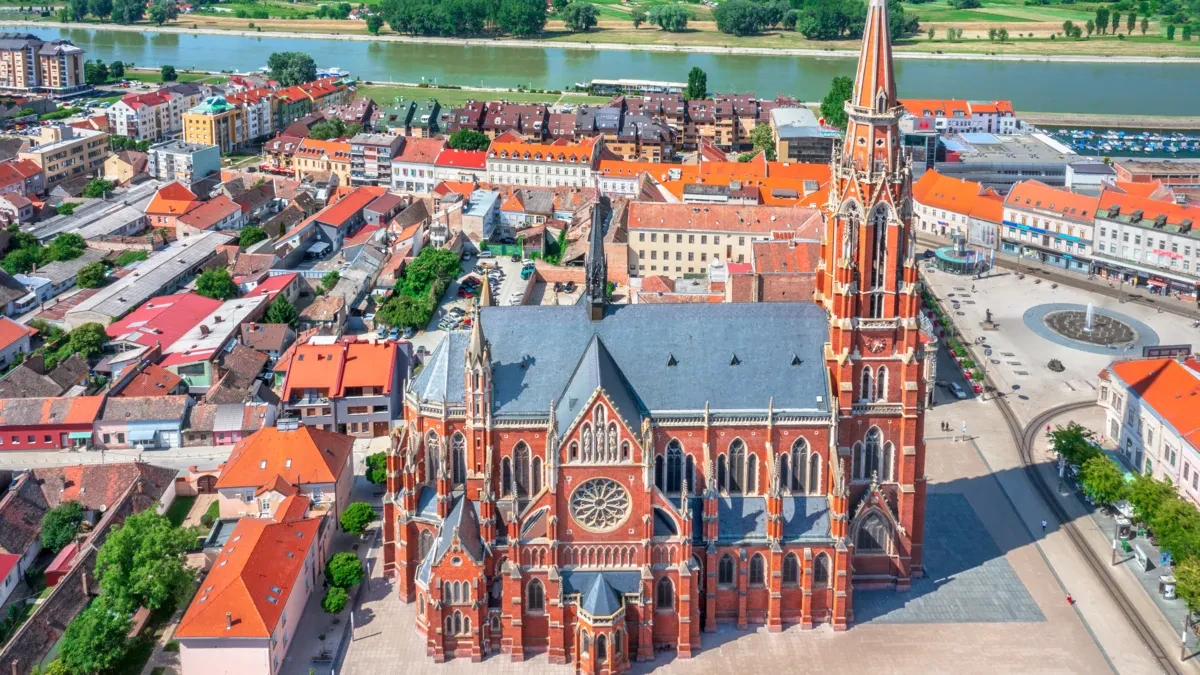
Visit Vukovar, a revitalized community determined to rebuild from the bitter Croatian War of Independence. Here, you'll tour the Baroque Eltz Manor, an 18th-century palace that now houses the Vukovar City Museum. Next, enjoy a delicious lunch at a family-run restaurant before setting out on a panoramic drive through the streets of Osijek. The cultural heart of Croatia's Slavonia region, Osijek is a picturesque city with a range of architectural styles on display, from the Baroque buildings of Tvrda-Osijek's Old Town, home to a Habsburg fort created as a line of defense against the Ottoman Empire-to Secession mansions and a Neo-Gothic church built of eye-catching red bricks.
Day 9 Budapest, Hungary
Located on opposite sides of the Danube, Buda and Pest each have their own distinctive character and allure. Explore this dynamic and multifaceted city with your choice of excursions-you can see it from a local's perspective on our walking tour, or cover more ground with a panoramic tour. Vibrant Budapest, Hungary's capital, offers an enchanting combination of East and West.
Join a MAKE TRAVEL MATTER Experience onboard today, during which a local speaker will present an engaging lecture on the history of the Roma people in Hungary, accompanied by a vibrant musical performance. In the evening, a special Captain's Farewell Reception and Dinner will be prepared for you.
Select your choice of these carefully curated excursions, which operate at the same time.
Budapest Panoramic Highlights with St. Stephen's Cathedral
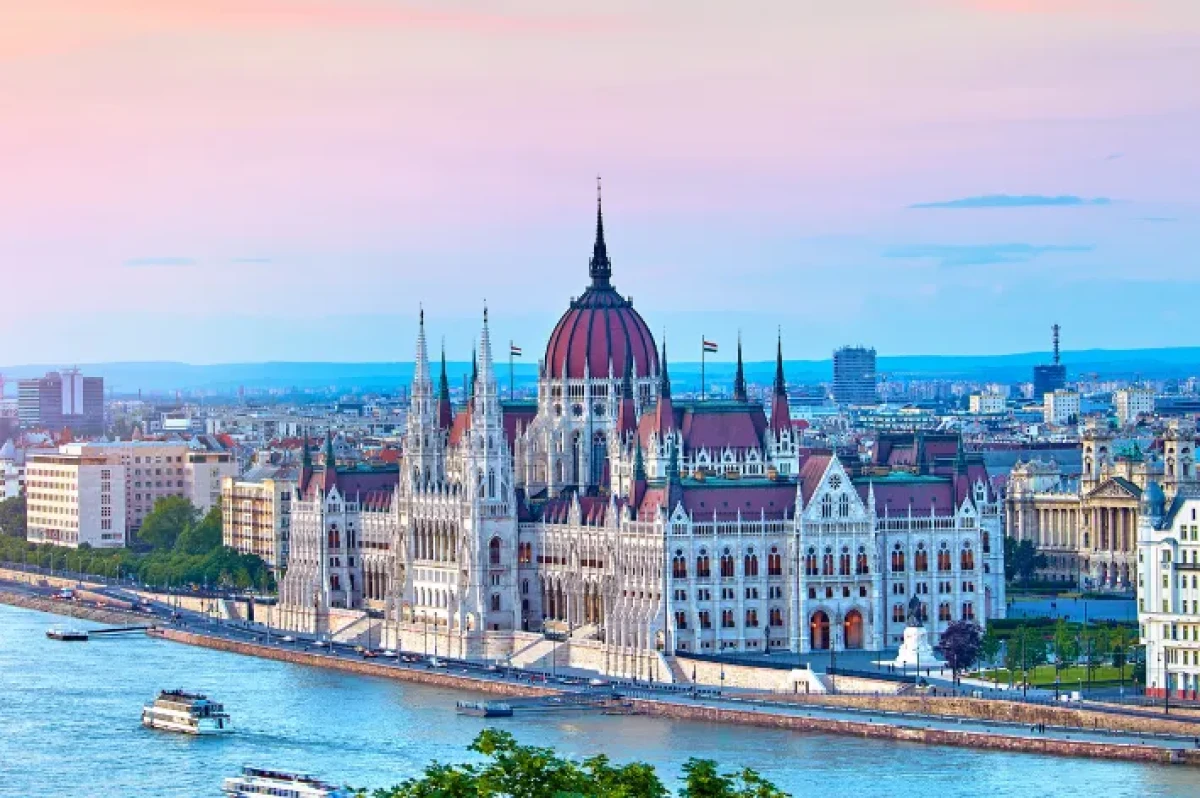
This panoramic tour is a wonderful way to get an overview of the city if you have never been here before. It will carry you from Heroes' Square, created in 1896 to honor the thousand-year anniversary of Hungary's founding and its greatest historical figures, past some of the city's most striking architectural sights-Dohany Street Synagogue, the Hungarian National Museum, the state opera house, St. Stephen's Basilica and the truly stunning Parliament Building-to Castle Hill, which has been called the heart of the nation. The city of Buda began here, when King Bela built a strong keep in 1243 as a defense against Mongol invaders; a castle replaced the simple fortress, and over the centuries other castles replaced that one. The current castle is primarily 18th century; a museum dedicated to Budapest's archaeological finds is housed there, and the Castle Hill district has been designated a UNESCO World Heritage Site. You'll go inside the magnificent 700-year-old Matthias Church, named for one of Hungary's greatest kings, and then wend your way on foot to the picturesque Fisherman's Bastion, whose seven fairytale-like towers represent the seven tribes that originally settled the region. It offers a glorious view of the city and the Danube below. Note: Visits to the interior of Matthias Church may not be possible on some weekends and Catholic holidays.
Budapest Communist Tour
Following World War II, Hungary spent 40 years as the Soviet-backed Hungarian People's Republic, a fascist regime that was massively unpopular for its oppressive politics, brutal secret police force (the AVH), and declining economic conditions. An uprising in 1956 failed to eradicate the Soviet-backed government, but did eventually result in more liberal policies. The Hungarian People's Republic finally ended with the fall of the Soviet Union in 1989. Step into the past for a tour of this fraught history, beginning at the Budapest Retro Interactive Museum. Afterwards, you'll drive by Heroes' Square on your way to Gellért Hill for spectacular views over Budapest, where you'll see Hungary's own Statue of Liberty. Originally erected as a monument to the Soviet 'liberation' of Hungary from Nazi occupation, the statue's inscription was later altered to celebrate Hungarian independence, freedom, and prosperity without mention of Soviet intervention.
Day 10 Budapest, Hungary
Enjoy a full day in Budapest at your leisure, perhaps stopping by the famous thermal baths, grabbing a drink at a ruin bar, or visiting one of the city's many museums.
Day 11 Budapest, Hungary
Budapest is an enchanting city that presents a vibrant mix of medieval and modern. In the evening, a special Captain's Welcome Reception and Dinner will be prepared for you.
Select your choice of these carefully curated excursions, which operate at the same time.
Budapest Panoramic Highlights with Franz Liszt Academy Visit
Hungary has been home to a great number of accomplished musicians, including the famous Franz Liszt, who established a university for music in Budapest in 1875. To this day, the Franz Liszt Academy is still a world-famous conservatory, with degree programs in classical instruments, singing, conducting, and composing. Take a guided tour of the academy today, culminating in an orchestra performance by some of the current students. Next, we'll embark on a panoramic drive with scenic stops overlooking the city.
Budapest Walk with Local Treats
Today your guide will show you how to snack around Budapest like a local, starting with a tram ride to the House of Parliament. Hop off the tram and take a short walk to your first treat: a coffee break at the First Strudel House of Pest. Energized by your cup of coffee, you'll continue your walk down to St. Stephen's Basilica-a handsome Neo-Classical building that is one of Budapest's most significant cultural sites. From there, we'll head to the Great Market Hall to sample some traditional Hungarian fare, such as salami, sausages, and cheese, while your local expert explains the intricacies of Hungarian cuisine.
Day 12 Bratislava, Vienna
Your ship sets sail from Bratislava later this morning and heads for Vienna today. You may relax onboard all day, perhaps enjoying a drink on the Sun Deck and taking in the scenery as the ship wends its way along the Danube River. When you arrive in Vienna, you'll cap off your day with a concert at the House of Strauss
Included excursions designed to enhance your journey
Nights Out: House of Strauss Concert
Step back in time at the last surviving music hall where all four Strauss composers-Johann Strauss I, Johann Strauss II, and the latter's two brothers, Josef and Eduard-once performed. Composer of 'The Blue Danube' and one of Europe's most celebrated musicians, Johann Strauss II captivated audiences at this venue several times during his lifetime. In his day, the building was a hub for Vienna's socialites. Begin with a brief tour of the exhibits, followed by an immersive audio-visual experience of Strauss compositions. Please note: On the rare occasions that the House of Strauss is unavailable, an alternative concert venue will be arranged.
Select your choice of these carefully curated excursions, which operate at the same time.
Bratislava-Small but Precious Walking Tour
Walk through the loveliest part of Bratislava with your local guide. Starting on the Danube promenade, you'll cross the former Coronation Square, pass the Slovak National Theater and St. Martin's Cathedral. This Gothic church was built into the medieval city's fortifications, and 19 Habsburg rulers were crowned inside it, including Empress Maria Theresa. That's because Bratislava, then known as Pressburg, became the capital of the Kingdom of Hungary after the Ottomans conquered Budapest in 1536, a status it retained until the middle of the 19th-century. Close to the cathedral you'll find Michael's Gate, the last remaining portal of the medieval wall-and your entryway into Bratislava's Old Town, which blends Gothic, baroque, and art deco structures with some less graceful reminders of the Communist era. The stately 18th-century Primatial Palace, in the center of Old Town, was the site where the Pressburg peace treaty was signed in 1805, in which Austria ceded a great deal of territory to Napoleon. Another 18th-century palace, Grassalkovich, is now the president of Slovakia's official residence. Take some time after the tour to browse through the attractive shops in the lovely art deco buildings that line the squares; you can find a wide selection of traditional folk items at the ULUV (Slovak Folk Culture) shop. And you'll definitely want to sample some of the local delicacies.
Let's Go: Hike to Bratislava Castle
This brilliantly white, enormous square building takes over the skyline of Bratislava, and from its grounds you'll find incredible views of the city below. After your hike to the castle, you'll stroll through the most beautiful part of Bratislava with the local guide. You will be introduced to the Capital of Slovakia, seeing sites like the Presidential Palace and the unique bridge colloquially known as UFO Bridge (you'll understand when you see it). Passing through the historic Old Town, we'll see the charming House of the Good Shepherd, the pastel tower of the Old Town Hall, and statues like Cumil, the sewage worker leaning out of a manhole in the street to smile at passersby.
MAKE TRAVEL MATTER
Experiences Life beyond the Iron Curtain
Take an authentic look into Communist-era Bratislava as you follow a local guide through the city. As you go, listen to real stories about life in the Czechoslovak Socialist Republic: how some locals escaped past the iron curtain, the Prague Spring of 1968, the Velvet Revolution, and more. Following your tour, you'll sit with a representative of a local NGO known as Post Bellum. Post Bellum works to preserve history by documenting first-hand accounts of life during World War II and Communism, interviewing everyone they can find—from resistance members to ex-KGB agents.
This MAKE TRAVEL MATTER Experience supports Global Goal 11: Sustainable Cities and Communities
Day 13 Vienna, Austria
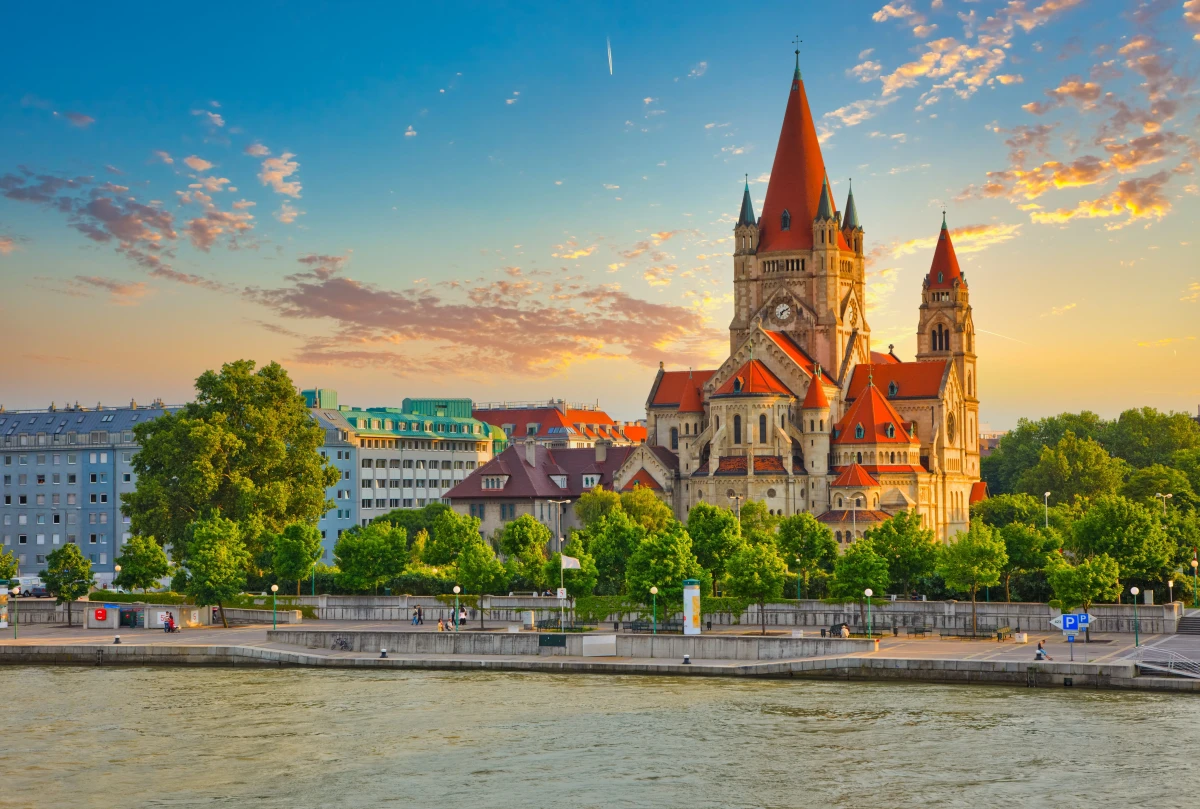
Vienna is a cultural treasure trove revered for its art and music (and sinfully rich pastries). Experience the "City of Waltzes" with a highlight tour of the city, as well as an expertly led tour of an extraordinary collection of art at the renowned Vienna Art History Museum. You have leisure time after your tour to explore Vienna on your own. You might wish to visit the Albertina Museum, which houses one million old-master prints and an impressive collection of works by 19th- and 20th-century painters, ranging from Renoir to Rothko. If you'd like to get a little exercise and see a completely different side of Vienna, borrow a bike from the ship and explore Danube Island and Prater Park. (For a wonderful view of the region, ride the Ferris wheel in Prater Park.)
Included excursions designed to enhance your journey
"Morning with the Masters" at the Vienna Art History Museum
The Habsburgs assembled an astonishing collection of artistic treasures over the centuries, which formed the basis for the works now on display at the Vienna Art History Museum (Kunsthistorisches). The doors open early especially for you as you join an art historian for a tour of some of the masterpieces gathered here: View a unique group of works by Pieter Bruegel the Elder, Vermeer's Allegory of Painting, Raphael's Madonna in the Meadow, and portraits by Rembrandt, Velazquez, Rubens, Titian, Tintoretto, and Van Eyck, among others, in the Picture Gallery. Then move onto the Kunstkammer galleries, where you can see Benvenuto Cellini's legendary salt cellar (the only gold sculpture he created that has survived to the present day) and hear its remarkable story. Your tour ends in the magnificent Cupola Hall, perhaps the architectural highlight of the splendid building.
Vienna-Imperial City Highlights
Ring Street, the great horseshoe-shaped boulevard lined with many of the city's major landmarks-Parliament, City Hall, the Vienna State Opera, glorious palaces, and museums-is a mere 150 years old, practically an infant for a city of Vienna's age. It replaced the walls and fortifications that had protected the city for centuries. Its construction was a testament to confidence, forward-thinking, and grand urban planning, and it resulted in a 50-year building spree. You'll pass most of these opulent landmarks on your way to the older section of the city, the area the walls once enclosed. Later, you'll walk along Karntner Street, the celebrated pedestrian boulevard that links the State Opera with St. Stephen's Cathedral, past the elegant shops on the Graben and the Kohlmarkt. The neighborhood offers a lively combination of historic architecture, street performances, shoppers' delights, and true Viennese atmosphere.
Day 14 Durnstein, Melk, Austria
Durnstein is one of our favorite towns along the Danube, a lovely place to wander cobblestone lanes, browse quaint shops, and maybe hike up to a ruined castle (with an intriguing tale all its own). You can also opt for a tasting or learn all about the world's costliest spice from the Wachau Valley's only saffron grower. Later, visit the 900-year-old Melk Abbey and its extraordinary baroque-style library. You have two ports of call in the incredibly scenic valley, Durnstein and Melk, and an assortment of delightful ways to explore this lovely region.
Select your choice of these carefully curated excursions, which operate at the same time.
Durnstein Wine Estate Visit with Tasting
There's no better way to conclude your visit to the Wachau Valley than with a special tasting of organic wines at Nikolaihof, perhaps the oldest winery in Austria. The location itself is fascinating: One may encounter remnants of the first buildings on the site-an ancient Roman fort-and taste wines in a deconsecrated 15th-century chapel. Owned by the Saahs family, Nikolaihof is both oldest winery in Austria and the country's oldest inhabited house, producing some of the world's best Riesling and Vetliner varietals; in fact, the 1995 Riesling Vinothek, bottled in 2012, actually scored 100 points in The Wine Advocate, the first Austrian wine ever to rank that highly. It is also one of the first wineries in the world to produce biodynamically certified wines. No herbicides, fertilizers, pesticides, or synthetic sprays are used in the vineyards. The grapes are harvested by hand, fermented without artificial yeast, and stored in Austrian oak casks for up to 20 years. Furthering their environmentally-friendly mission, Nikolaihof even produces a cosmetics line out of the waste product from the wine production. The antioxidant-rich skincare products are the world's first biodynamically certified grape cosmetics. After your visit, discover Durnstein on a stroll through town before returning to the ship. Considering its diminutive size, the village of Durnstein offers much to explore. The famous blue baroque tower of the abbey church is doubtless its best-known landmark, but the ruined castle above the town provides its most romantic tale. There Richard the Lionheart was imprisoned until he was found by his faithful bard, Blondel, and ransom could be raised-or so the legend goes. Walk along the town's narrow streets, past 16th-, 17th-, and 18th-century houses; it's an up-close look at over 300 years of architecture.
This MAKE TRAVEL MATTER Experience supports Global Goal 12: Responsible Consumption and Production.
Melk Abbey with Library Visit
The Babenbergs, a great medieval ducal family that controlled a wide swath of Austria before yielding to the Habsburgs, were the first to erect a castle on the hill above Melk, which they subsequently gave to Benedictine monks. These monks, some 900 years ago, turned it into a fortified abbey—and the greatest center of learning in Central Europe. Their library was celebrated far and wide (and still is; Umberto Eco paid tribute to it in his best-selling novel The Name of the Rose). Medieval monks there created more than 1,200 manuscripts, sometimes spending an entire lifetime hand-lettering a single volume. Today the library contains some 100,000 volumes, among them more than 80,000 works printed before 1800. This beautiful complex, completely redone in the early 18th century, is a wonderful example of baroque art and architecture, and the views from its terrace are spectacular. As you walk through the abbey's Marble Hall with your guide, look up at the ceiling fresco painted by Paul Troger: Those classical gods and goddesses represent Holy Roman Emperor Charles VI, allegorically bringing his people from dark to light and demonstrating the link he claimed to the original Roman Empire. After your tour of the abbey, you'll have time to explore Melk on your own, or you can take the motorcoach back to the ship.
Durnstein Village and Saffron Talk
The first Wachau Valley saffron crocuses were planted at the end of the 12th century, making saffron a valued crop for 700 years-but it disappeared from the terraced hillsides early in the 20th century. It wasn't until 2007 that an ecologist found mention of it in an 18th-century document at Melk Abbey's celebrated library. Bernard Kaar, who spent years researching the history of saffron and still more years cultivating the world's only biodynamically certified saffron, is one of the Wachau's most important producers. Meet Bernard and his wife, Alexandra, for a fascinating introduction to saffron-the plant, the spice, its cultural significance, and their farm's uniquely sustainable methods of producing it. Later walk along the town's narrow streets, past 16th-, 17th-, and 18th-century houses; it's an up-close look at over 300 years of architecture. Considering its diminutive size, the village of Durnstein offers much to explore. The famous blue baroque tower of the abbey church is doubtless its best-known landmark, but the ruined castle above the town provides its most romantic tale. There Richard the Lionheart was imprisoned until he was found by his faithful bard, Blondel, and ransom could be raised—or so the legend goes.
This MAKE TRAVEL MATTER Experience supports Global Goal 12: Responsible Consumption and Production.
Let's Go: Biking the Wachau
You've likely seen bicyclists pedaling beside the river during your cruise. The Danube bike path is Europe's most popular bike route; it follows the river between Regensburg and Passau. Take to the path today and wheel along a particularly scenic 20-mile stretch between Durnstein to Melk that affords some of the most impressive views of the famed Wachau Valley. The flat riverbanks make for easy biking, freeing you to fully enjoy the beauty of the surrounding vineyards, wooded mountains, and charming villages.
Day 15 Linz, Salzburg, Austria
Mozart's birthplace of Salzburg is nestled in a glorious alpine setting that sparkles like a winter wonderland. Linz may be best known for its famous Linzer torte, but it's also a hotbed for the arts. See the sights with a local expert and visit a family at their farm in the countryside. Austria's third-largest city, Linz boasts a long history of trading and textile manufacturing, but these days it is perhaps best known for its electronic arts and annual festival.
Select your choice of these carefully curated excursions, which operate at the same time.
Full-Day in Salzburg with Sound of Music
Not only is Salzburg famously the shooting location for the 1965 film, The Sound of Music, but it is also the birthplace of Wolfgang Amadeus Mozart. Today, we'll dive into the city's deep musical heritage with a walking tour through its picturesque squares and baroque architecture. Visit Maria's church in the nearby town of Mondsee, as well as the Viennese gardens around which she and the children sang "Do Re Mi." See the house where Mozart was born and take a lift up the Monschberg mountain for an excellent view of the city.
Linz Town and Country: Linzertorte and Cider Farm Visit
Get to know Linz on foot with a local expert who will take you by all the major sites in town, from Mozart's apartment to the old Jesuit Cathedral. You'll stop for a bite at Konditorei Jindrak, home of the Original Linzer Torte. Enjoy a cup of coffee alongside this thin, buttery pastry made with ground nuts, filled with fruit preserves and topped with a lattice crust. Next, the group will split in two, each half heading out to a countryside cider farm. There, you'll be treated to a lunch of local specialties and house-made cider-an excellent way to immerse yourself in rural Austrian life and scenery, while also supporting local farmers. Both farms are entirely organic and give special care to the quality of the ingredients they produce, from the careful cultivation of their bountiful orchards to the livestock they keep in large grazing pastures. This type of farming produces less waste and-as you'll see during your lunch there-better food.
This MAKE TRAVEL MATTER Experience supports Global Goal 12: Responsible Consumption and Production.
Day 16 Passau, Germany
Passau is a crossroads in more ways than one, as three rivers meet here and three nations nearly do, making for a fascinating cultural mosaic. Get to know the town and its main claim to fame-Europe's largest pipe organ-or 'Let's Go' with an invigorating riverside hike. In the evening, a special Captain's Farewell Reception and Dinner will be prepared for you.
Select your choice of these carefully curated excursions, which operate at the same time.
Let's Go: Hike along the Ilz River
Put on your hiking boots, grab a windbreaker and a bottle of water, and head out with a local hiking guide and nature expert to explore the banks of the Ilz River. This small but rushing tributary of the Danube originates deep in the Bavarian Forest, near the Czech border, and is just 40 miles (65 kilometers) long. Its upper stretch is a premier whitewater rafting location, but you'll be hiking along the lower, serene end of the river. Your starting point is Hals-Hochstein, where you'll pick up a nature trail that follows a curve of the river and then climbs a steep hill, where you have a great view of the river and woodlands. You will cross the river repeatedly, once by way of a dam and again toward the end of your four-mile (6.5-kilometer) hike, as you loop back to the Hals.
Passau Three Rivers
Passau is built upon the meeting point of three rivers: the Danube, the Inn, and the Ilz. Sprawling across the riverbanks, the city has a particularly charming setting, which you'll get to appreciate on a walking tour of its top sites. After walking around Passau, we'll drive to a beautiful natural habitat on the Ilz, where you can take a short walk and relax in the scenic environment before reboarding the coach for a trip up to the Kloster Mariahilf to see the three rivers from above.
Day 17 Passau, Germany
Disembark the ship. And you will be transferred to Munich Airport for your flight home.
Terms and Conditions
- All prices are quoted in Australian dollars (AUD), are based on per person twin-share occupancy unless otherwise stated, and include applicable taxes, fees, and discounts available at the time of publication.
- Prices, itineraries, availability, and inclusions are correct at the time of publication (11th Oct 2026) but are subject to change without notice due to supplier availability, currency fluctuations, fuel surcharges, airline costs, government taxes, or other operational factors outside our control.
- Advertised “from” pricing is based on lead-in cabin categories, including Inside, Oceanview, or Balcony cabins where specified. Some cabins may feature obstructed views. Cabin categories, layouts, and inclusions are subject to cruise line availability and conditions.
- Advertised packages may include bonus nights, upgrades, package savings, onboard credit, promotional offers, or other value-added inclusions where specified. Offers are subject to availability and may be amended or withdrawn by suppliers without notice.
- Airfares included in packages are subject to airline availability and fare conditions at the time of booking. Unless otherwise stated, fares are based on economy class travel from Sydney and may be non-refundable and non-changeable. Additional charges may apply for alternative departure cities, airfare upgrades, flexible fare options, routing variations, or seasonal surcharges.
- Flight schedules, airlines, stopovers, and routing are subject to change by the airline or supplier. ecruising is not responsible for schedule changes, delays, or cancellations made by third-party travel providers, however your rights under the Australian Consumer Law remain unaffected.
- Travel packages may include products and services provided by multiple independent suppliers, including airlines, cruise lines, hotels, and tour operators. Each supplier’s own booking terms, conditions, cancellation policies, and conditions of carriage apply to the relevant travel component.
- Accommodation providers may charge additional resort fees, city taxes, gratuities, security deposits, or incidental charges payable directly by the guest at check-in or check-out unless otherwise stated.
- It is the responsibility of each traveller to ensure they hold a valid passport, visas, travel permits, vaccinations, travel insurance, and any other required travel documentation for their journey. Travellers should confirm all entry and health requirements with the relevant authorities prior to departure.
- Supplier-specific promotional terms and conditions may apply to advertised inclusions and cruise offers. Please refer to the relevant supplier website or contact ecruising for full details.
- To the extent permitted by law, ecruising acts as an agent for third-party travel suppliers and is not liable for the acts or omissions of those suppliers. Nothing in these terms excludes, restricts, or modifies any consumer guarantees, rights, or remedies available under the Australian Consumer Law.
- We reserve the right to correct any errors, inaccuracies, or omissions, including pricing errors, at any time prior to confirmation of your booking.
- Additional accommodation may be required pre or post the cruise to fit in with flight schedules and surcharges will apply. Please check with your travel agent.
The Imperial Danube
Includes:- Cruise
- Flights
- Hotel
- Transfers
- Guided Tour
- Activity
