Dragons, Reefs & Remote Shores
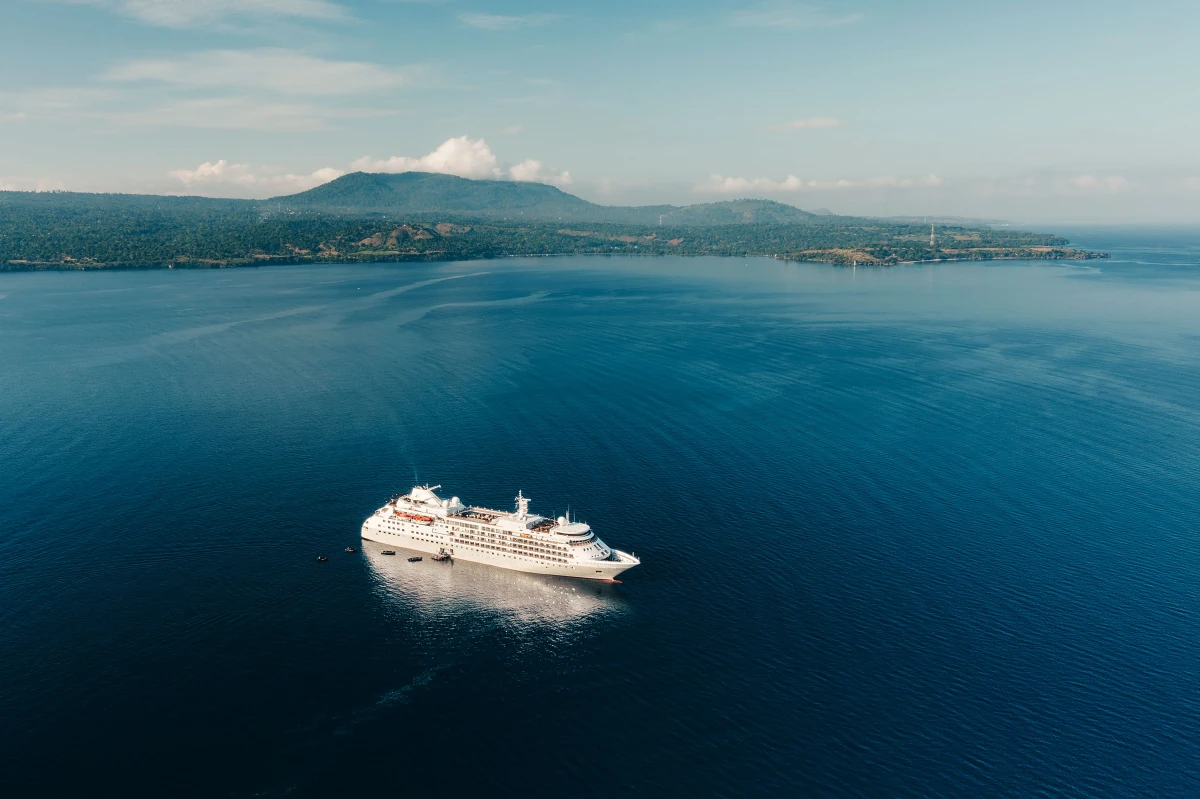
From the bustling streets of Manila to Australia's wild tropical north, this Silver Cloud expedition voyage traces a fever dream of dazzling reefs, ancient cultures, and remote islands across the heart of Southeast Asia.


- Package Details
- Itinerary
- Terms and Conditions
PHILIPPINES, BORNEO & INDONESIA TO AUSTRALIA'S TROPICAL NORTH
BONUS FLIGHT & STAY + USD$300 shipboard credit per suite when booked before 28 March 2026.
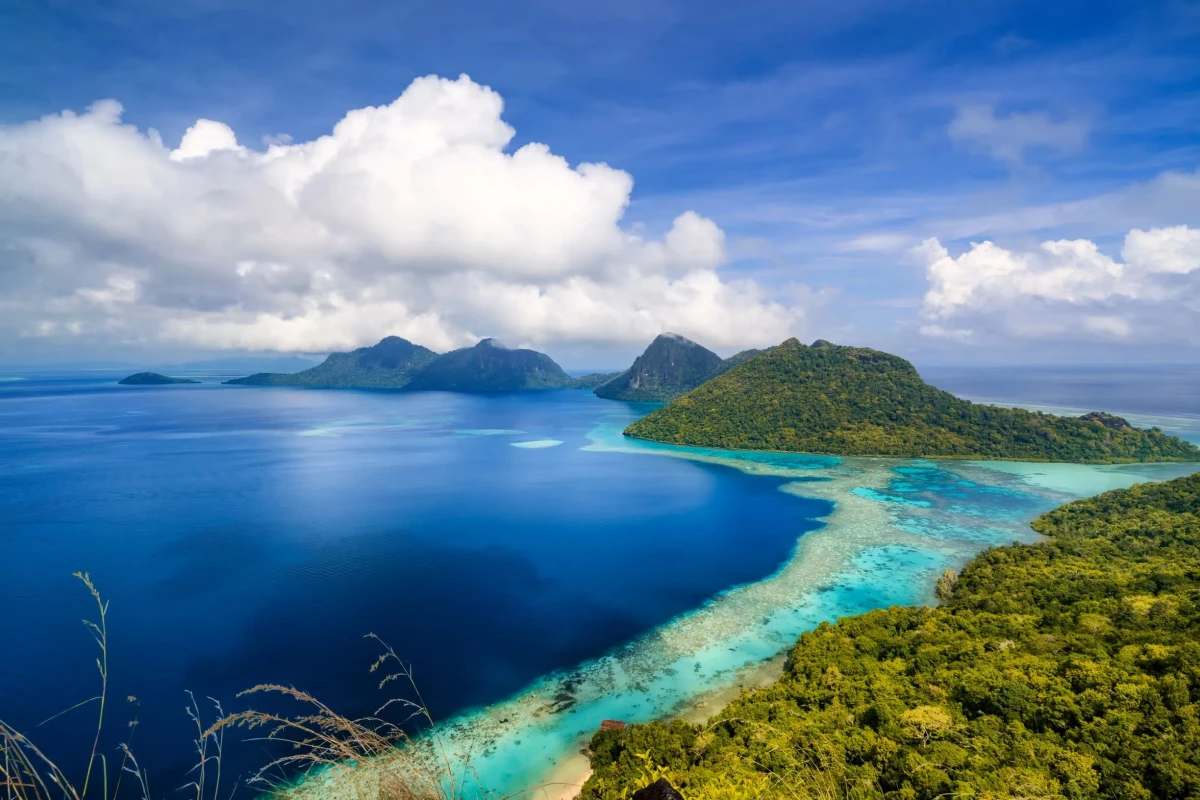
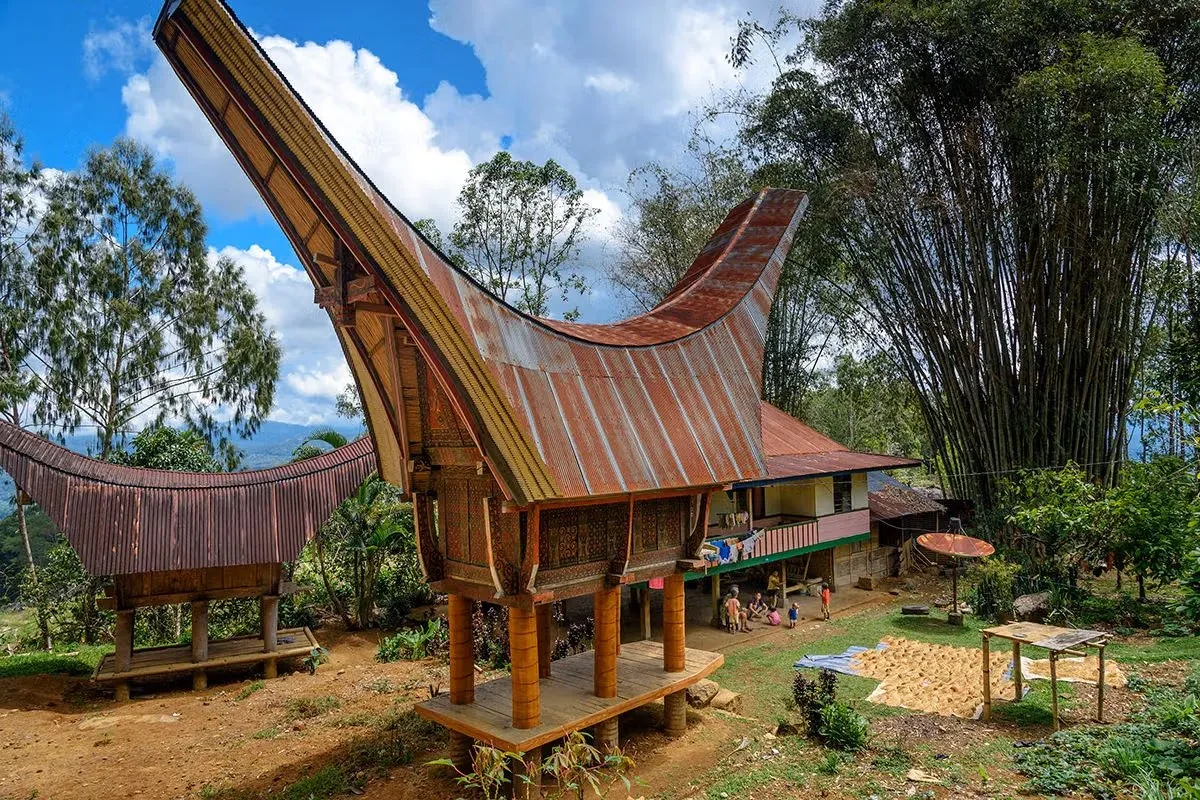
From bustling Manila, launch into an exhilarating three-week exploration of wild and remote Southeast Asia with Silversea's expedition team. A fever dream of dazzling reefs, lush rainforests, hidden lagoons, and volcanic isles. Reach Tana Toraja, a remote region of cliffside burial sites and canoe-shaped ancestral houses, before encountering Komodo dragons. You'll journey through Borneo, Sulawesi and Indonesia's islands in turquoise waters — before crossing open seas to Australia's tropical north.
Package Inclusions:
- Return economy class flights from Australia* to Manila, with your return journey from Darwin
- Looking for more comfort? Ask us about upgrades to Premium Economy or Business Class.
- Want to explore more? We can help you extend your stay and customise your journey. - Date: 22-23 June 2027
A sprawling, energetic capital where Spanish colonial churches and American-era boulevards collide with buzzing night markets and the golden sunsets of Manila Bay - the perfect gateway to the Philippine archipelago. - Date: 23 June to 14 July 2027, 21 nights - Manila to Darwin
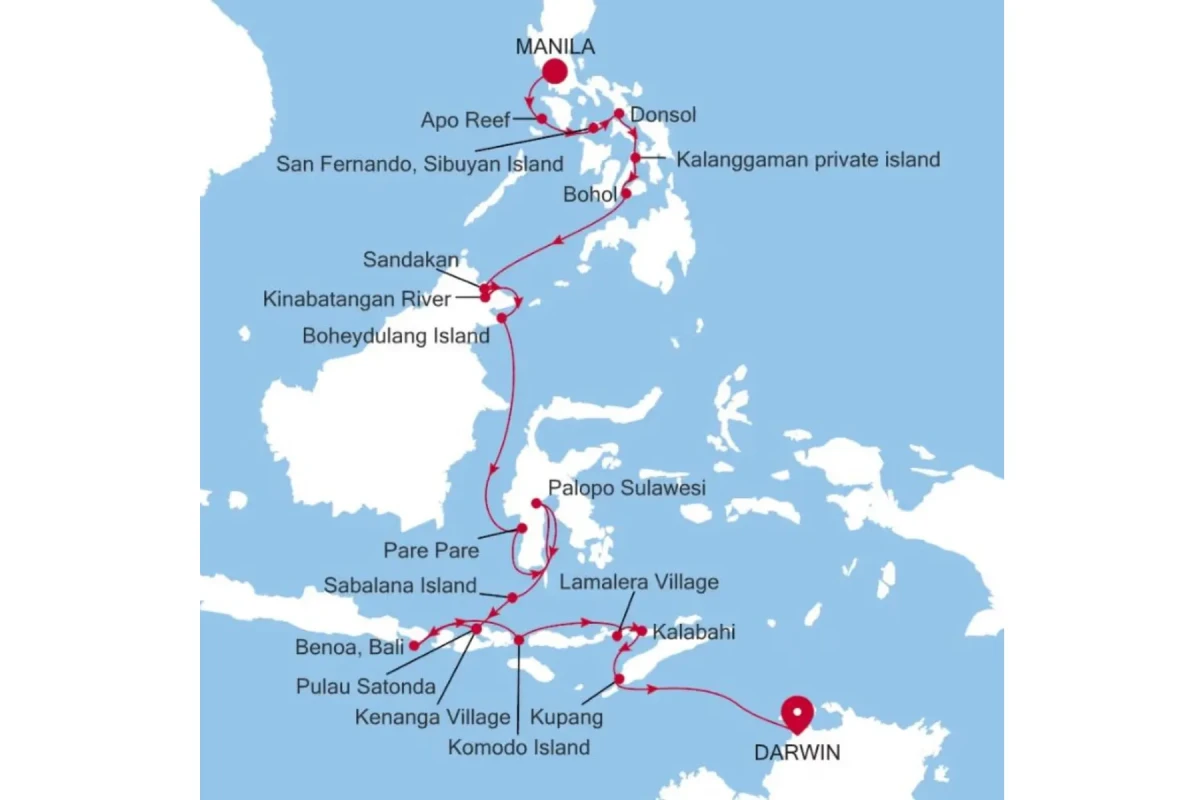
Beginning in Manila, cruise through the remote islands, snorkel the pristine waters of Apo Reef, Donsol, and unwind on the postcard-perfect shores of Kalanggaman private island. Cross into Borneo to explore the wildlife-rich Kinabatangan River, before venturing into the cultural heartland of Sulawesi and the ancient traditions of Tana Toraja, sun soaked Bali, then come face-to-face with the legendary Komodo dragon before crossing the open Timor Sea to arrive in Darwin, Australia. - Enjoy an exclusive USD$300 bonus onboard credit* per cabin
- All onboard meals in complimentary dining venues
Expedition exclusive: Expert lectures, guided Zodiac, land & sea tours
Unlimited pour of Champagne, fine wines, spirits and specialty coffees
Wi-Fi, enrichment lectures and onboard entertainment
Butler service for every suite
24-hour in-suite dining
Gratuities onboard
Port charges & taxes
- Manila
22 JUN 2027 Private transfer from Manila airport to hotel
23 JUN 2027 Private transfer from Manila hotel to port
Darwin
14 JUL 2027 Private transfer from Darwin port to airport
Itinerary
Day 1 Manila
Known as the Pearl of the Orient, Manila is the Philippine's sprawling capital city and a chaotic scramble of intoxicating urban energy. A megacity of culture and creativity, there's a lot to discover amid these chockablock streets. The delicious food wins many fans, but it’s the friendly Filipinos - always eager to help - who ensure that Manila takes a special place in the hearts of many visitors. The Baywalk is one of the city's best places for catching a legendarily intense sunset - or wandering among joggers and leisurely strollers. The city's Intramuros area is its cobbled historic core - and was the centre of power when the Spanish ruled these lands. Decorated with colonial architecture and citadels, the district is known for its rumbling horsedrawn carriages and storied history. Head to Fort Santiago, which aims canons out across the water from its chunky stone walls. The UNESCO World Heritage Site stands against the odds, despite World War II bombardments, fires and earthquakes - a true testament to Manila's incredible resilience. As one of the most densely populated places in the world, Manilla can be manically busy at times, but you can always escape to Rizal Park. With Chinese and Japanese gardens and plenty of room for open-air events, it's a beautiful oasis within the city. It's also an incredibly important national symbol, as the location where the hero of independence, Jose Rizal, was executed. A large statue now memorialises him here, and the park was renamed in his honour. Day 2 Apo Reef
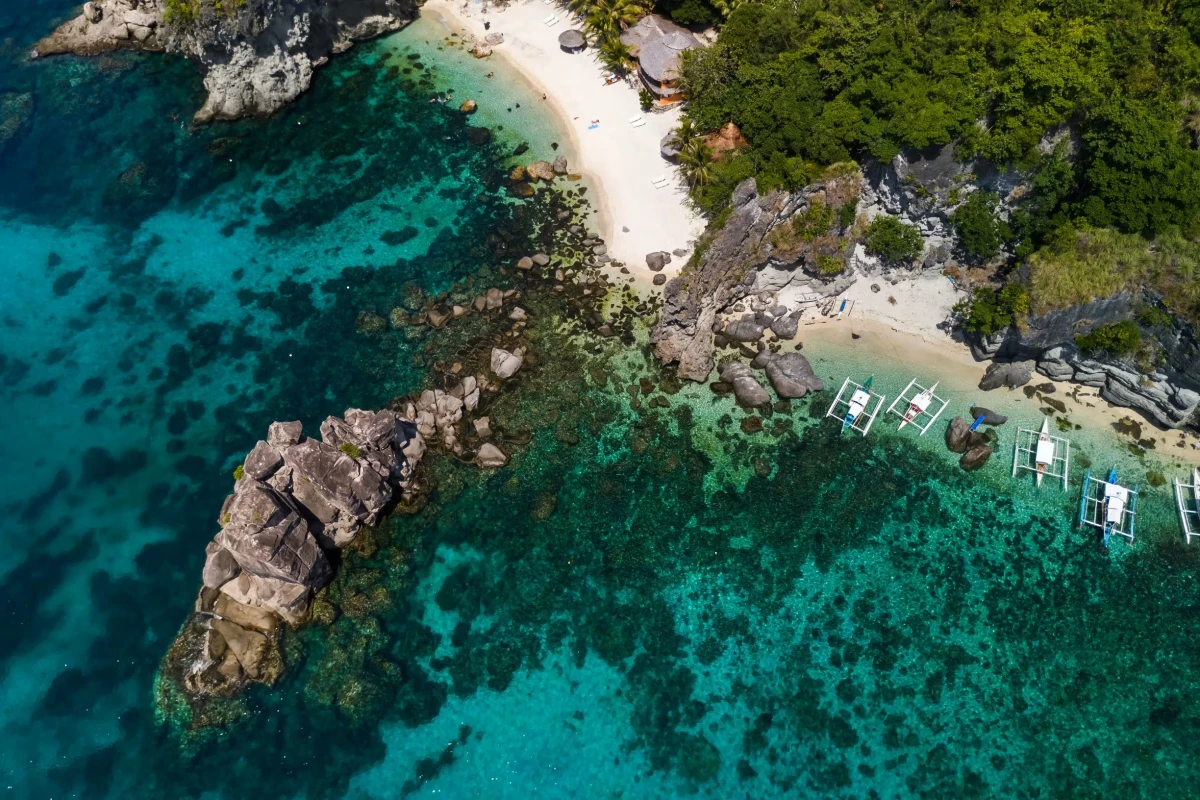
An underwater paradise teeming with biodiversity, Apo Reef Natural Park is a tentative UNESCO World Heritage site made up of a reef and three islands. Apo Island is the largest island and harbours mangroves and beach vegetation on its 22 hectares. Apo Reef, the important and main geographical features of the park, lies to the east of Apo Island. Snorkelers will enjoy the crystal blue waters and be looking for some of the 400 varieties of soft and hard corals registered, cushion stars, damsel fishes, butterfly fishes, angel fishes, parrot fishes, cardinal fishes, trigger fishes, and wrasses. Relax on the beach on Apo Island, which features a shallow lagoon surrounded by a verdant mangrove forest. Close to 50 species of birds have been recorded for the park and there are records of the rare Nicobar Pigeon for Apo Island. Day 3 San Fernando, Sibuyan Island
Our stay in San Fernando will present a unique opportunity to immerse ourselves in the traditional ways of Sibuyan Island. Day 4 Donsol
Donsol and Ticao Islands flourished in the 1500s as shipping dockyards. They were known not only for the abundance of hardwoods, but also for the excellent shipbuilding skills of the locals. With the dawn of larger steel vessels and with modernization, these two towns have been left behind. Donsol became a quiet fishing town while the people of Ticao Island shifted their focus to raising cattle for the Spanish owned haciendas. Things drastically changed for Donsol in the late 1990’s when a traveller stumbled upon the island and noticed the large numbers of whale sharks in the waters surrounding the island. Amazingly, the Donsolanos considered these large sharks to be pests because of their habit of bumping into fishing boats. Today, the fate of the whale sharks relies on eco-tourism. Donsol is one of the few places in the world that can offer an almost assured whale shark sightings during the season, between November and June, when they visit the area to feed on the rich nutrients coming out of the mouth of the Donsol river. Day 5 Kalanggaman private island
The Philippines is an archipelago of over 7600 islands and tiny Kalanggamman Island, set between Cebu and Leyte is widely considered to be the most beautiful of all, a slice of paradise on earth.
The approach to the island offers a first glimpse of abundant picturesque palm trees sprouting from whiter than white sand, seemingly floating in the middle of the clearest blue sea.
The island was named “langgam”, a local word meaning bird and is indeed a rare bird. Just 750 metres long, you can walk round the bird shaped island in little under an hour. At low tide a stroll along the long sandbar of powdery sand and tiny seashells is the perfect place for a sublime photo opportunity.
The blue and green crystal waters are enticing and swimming, snorkeling and diving opportunities are not to be missed. Once under the water, a colourful new world opens up, coral gardens teeming with shoals of exotic fish, sea turtles swimming lazily past,
A peaceful and relaxing vibe predominates the island as visitors relish the outstanding beauty of this simple and secluded spot. The northern part of the island is quieter still, the only sounds being the sea breeze rustling the palm leaves and crashing waves.
A barbeque of grilled fish on the beach, as the evening brings spectacular sunsets in buttery colou Day 6 Bohol (Tagbilaran)
Bohol is an island province consisting of Bohol Island and 75 minor surrounding islands. Its capital is Tagbilaran City. With a land area of 1,589.7 sq mi and a coastline 162 mi, Bohol is the tenth largest island of the Philippines. In the 1600’s, the Jesuits introduced Christianity to the region. They built huge churches, which were declared heritage sites in the early 2000’s. Unfortunately most of these churches were heavily damaged by the 7.2 magnitude earthquake of 2013. Today, some of these churches are being restored. The province is a popular tourist destination for its beaches, historical sites, natural beauty & geological features, such as the Chocolate Hills that consist of over 1600 hills of limestone formation. The island of Panglao, located just southwest of Tagbilaran City, is famous for its diving and routinely listed as one of the top ten diving locations in the world. The Philippine Tarsier, considered the second-smallest primate in the world, is indigenous to the island. Day 7 Day at sea
Days at sea are the perfect opportunity to relax unwind and catch up with what you’ve been meaning to do. So whether that is going to the gym, visiting the spa, whale watching, catching up on your reading or simply topping up your tan these blue sea days are the perfect balance to busy days spent exploring shore side. Day 8 Sandakan (Sabah)
Meet the extraordinary wildlife of Sabah a place where orange orangutans move through the rainforest and elusive sun bears hide out in the safety of dense canopy. Join the extraordinary animals in rehabilitation centres where they are lovingly cared for before often being released back into the jungle's interior. You'll also have the chance to encounter one of nature’s more unusual creatures the bizarre proboscis monkey named after the bulbous swinging noses they sport. Sandakan stretches along a scenic bay looking out over the Sulu Sea. A former trading hub ships voyaged here seeking riches from the thick jungle especially sought after bird nests. Nowadays the city has found its niche as a major palm-oil and cacao exporter. Bridges creaking planks and wooden walkways form an elaborate floating maze over the waves at Sim-Sim Water Village. Visit this fishing hotspot to sample some of the succulent local fare tasting freshly prepared meals like butter prawns seafood broths and fried squid snacks. Having served as the British capital of North Borneo there’s always time for an afternoon tea to keep you refreshed during your explorations. World War II history hangs heavy around the city’s neck and Sandakan was heavily shelled during the hostilities when it was occupied by the Japanese. Visit the Memorial Park to learn of the horrifying Sandakan Death Marches which killed thousands of Allied prisoners of war. Day 9 Kinabatangan River
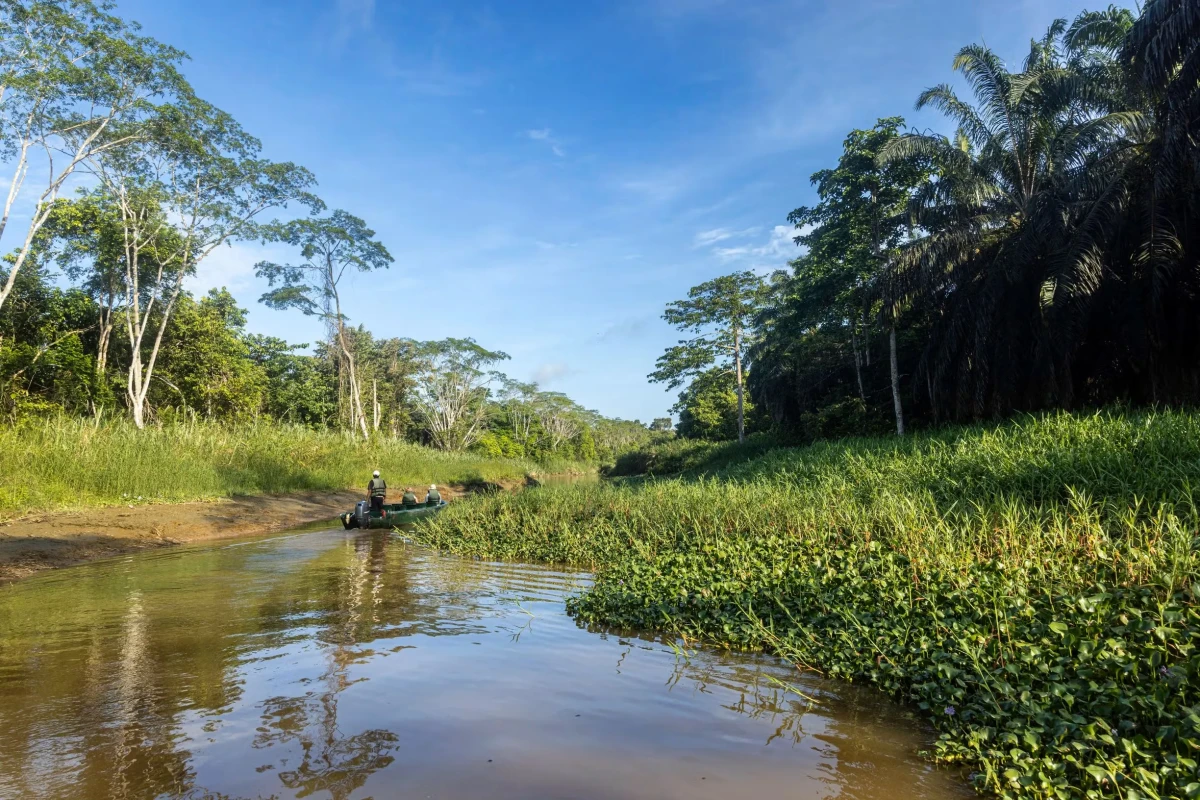
Day 10 Boheydulang Island
Day 11 Day at sea
Days at sea are the perfect opportunity to relax unwind and catch up with what you’ve been meaning to do. So whether that is going to the gym, visiting the spa, whale watching, catching up on your reading or simply topping up your tan these blue sea days are the perfect balance to busy days spent exploring shore side. Day 12 Pare Pare
Neolithic sites recently discovered in West Sulawesi bear witness to man's presence on the island for millennia. Buddhist artifacts dating from the 4th & 5th centuries were discovered in South Sulawesi. This region was with its protected bays an ideal spot on the trade routes to drop anchor. In fact, the Bugis are reputed for their gift of boat building. The first Western visitors were Portuguese and, as many of their ships were wrecked off the coast of Minahassa, they gave the name "Celibes' (formidable) to the island. The Portuguese were followed by the Spanish who came preaching Christianity from their base in the Philippines. When the Dutch arrived, they chased all foreigners from the island and established trade monopolies. Despite the foreign influences, some tribes preserved their ancient pagan ceremonies and today fascinate the ever-growing number of visitors to the island. These are in particular the Toalans and the Torajans.
Pare Pare is South Sulawesi's second city with a population of 100,000 although it feels more like a market town. It is used by cargo ships to unload goods destined for the local population. The town runs up the coast in a long narrow strip and is only 2 or 3 streets wide. The center is marked by a statue of a man standing on a map of Indonesia "Monument Rkayat Rejuan."
In the mountainous northern region of South Sulawesi live the 320,000 Toraja people at an altitude of 1200 meters. These mountain people remained isolated from the outside world until the 20th century, and many of their traditions still remain. The Toraja world consisted of three classes of people: To Parengnge (nobles), the Makaka (commoners) and the Kaunan (slaves). Their life cycle is based around complementary elements of life and death, East and West, sunrise and sunset, morning and afternoon, left and right, etc. The Rituals of the East (rambu tuka) are the life giving elements - smoke ascending; rice, exorcism, birth, first haircut. The Rituals of the West (rambu solo) are death rituals. The Toraja life centers around the death rituals, which often involve two ceremonies, the second taking place several months to years later. They can be prohibitively expensive for families and involve elaborate wrapping and lamentation rites, funeral rituals involving the slaughter of many bulls.
Pier Information
The ship will berth alongside in Pare Pare. The center of town is within walking distance. Metered taxis are not available. The local public transport of 6-8 seat minivans cost about $4.00 for a short ride. Pedi cabs are also available near the pier.
Shopping
The local market is colorful with a variety of nice souvenirs to be found, especially hand-woven basket goods. However this is not the region's most important shopping area. The local currency is the rupiah.
Cuisine
Apart from good fresh seafood, one of the main reasons to visit here is to sample the cuisine of the Toraja, who live in the highlands. Their specialty is piong, food cooked in bamboo sections. It is usually features pork or chicken and must be ordered in advance. Most restaurants feature a combination of Western, Toraja and Chinese dishes.
Other Sites
La Bengene Museum
This small museum is about 2km south of town in Bacukiki sub district and houses the personal effects of King Bacu Kiki.
Mosque
The multi-domed mosque on Jalan Hasanuddin is worth a visit.
Beaches
There are no beaches to be recommended in this area. However, you may see locals swimming along the pier.
Torajaland
This fascinating region is located in the highlands of northern South Sulawesi and can be visited on the full day shore excursion. The journey to Torajaland takes approximately 3 hours and 2.5 hours returning.
Private arrangements for independent sightseeing may be requested through the Tour Office on board.
Day 13 Palopo Sulawesi (Gateway for Tana Toraja)
Palopo is a municipality in the South Sulawesi Province of Indonesia with a population of approximately 150 000. The city has an ancient history dating back to its founding in the early 1600s. The port has always had a trade link to the highlands of Sulawesi known as Tana Toraja and a physical link through a twisting mountain pass making it a perfect gateway to Toraja. The land of Toraja is an ancient and mysterious place where residents adorn their homes with the horns of water buffalo killed in funeral ceremonies and ornate carvings painted in bold reds and black. In many ways the Tana Toraja customs of honoring the dead dictate their ways of life. Human remains rest in stone chambers in the hillsides and burial caves high in the cliffs. Elaborate funeral ceremonies which can take months or even years to prepare can go on for days and can draw hundreds of people in a festival-like atmosphere.Day 14 Sabalana Island
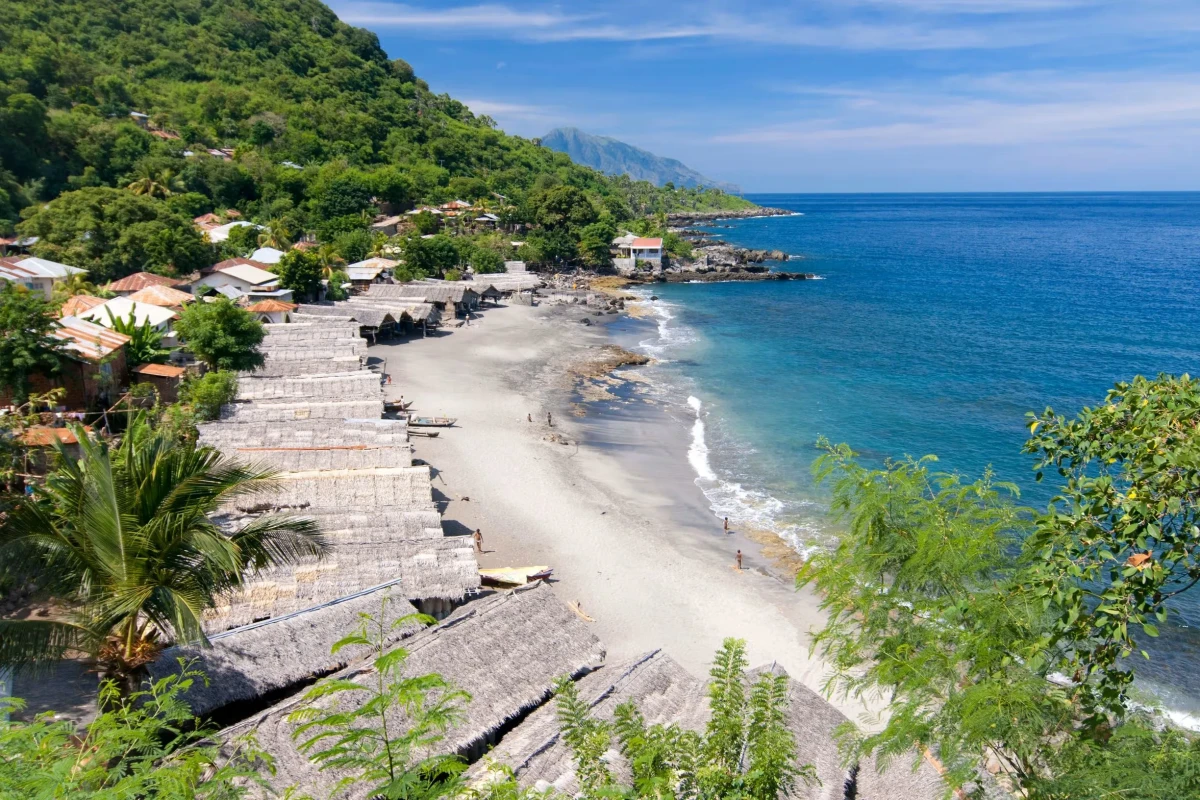
Day 15 Pulau Satonda
Day 16 Kenanga Village
Day 17 Benoa, Bali
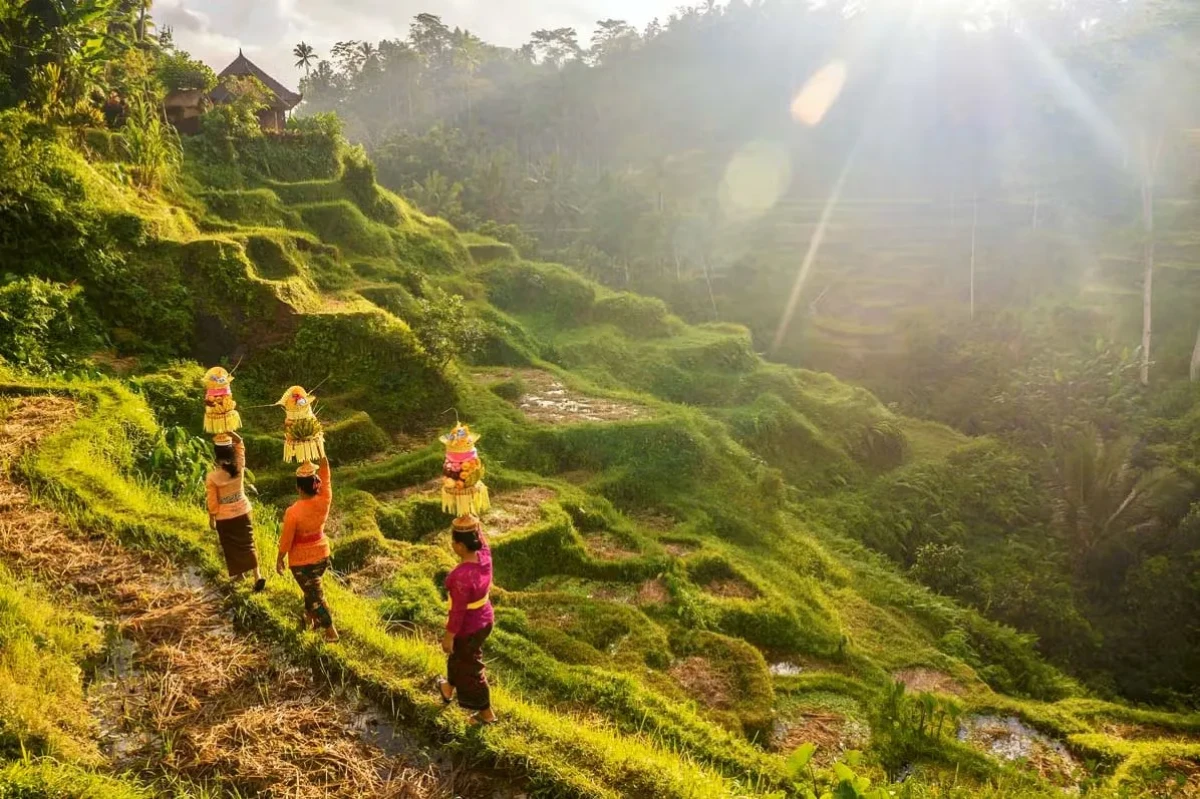
Bali. A.k.a. Island of the Gods, Land of a thousand temples or the World’s last paradise. As superlative as these monikers may sound, they do not do justice to the actual reality of the island. Bali is as good as everyone says – verdant mountains with terraced rice fields in one direction, black sand beaches in another and captivating people that will leave even the most seasoned traveller humbled. If you’re looking for a Garden of Eden that really does have it everything, Bali ticks all the boxes. The rich and diverse culture of the island is what sets Bali apart from Indonesia’s (many) other tropical paradises. The country’s estimated 10,000 Buddhist-Hindu temples, with their daily offerings of lotus flowers and fruit are testament to the gentleness of the islander’s belief. Then there is the vibrant arts and crafts scene, notably in Ubud in the centre of the island, but prolific everywhere. Ideal souvenirs to bring back range from gorgeous silver jewellery to intricate wood carvings. Additionally, do try to see a traditional dance if possible, particularly if accompanied to local gamelan music. No one could mention Bali without mentioning the food. Dishes range from elaborate meals to street food bites, but all are without exception ambrosia. Do not miss out on tasting a succulent chicken satay, betutu (apparently the King’s favourite meal) and sambal matah. But whatever you decide to discover, you can be assured of a taste sensation that will remain with you long after you have returned home.Day 18 Komodo Island
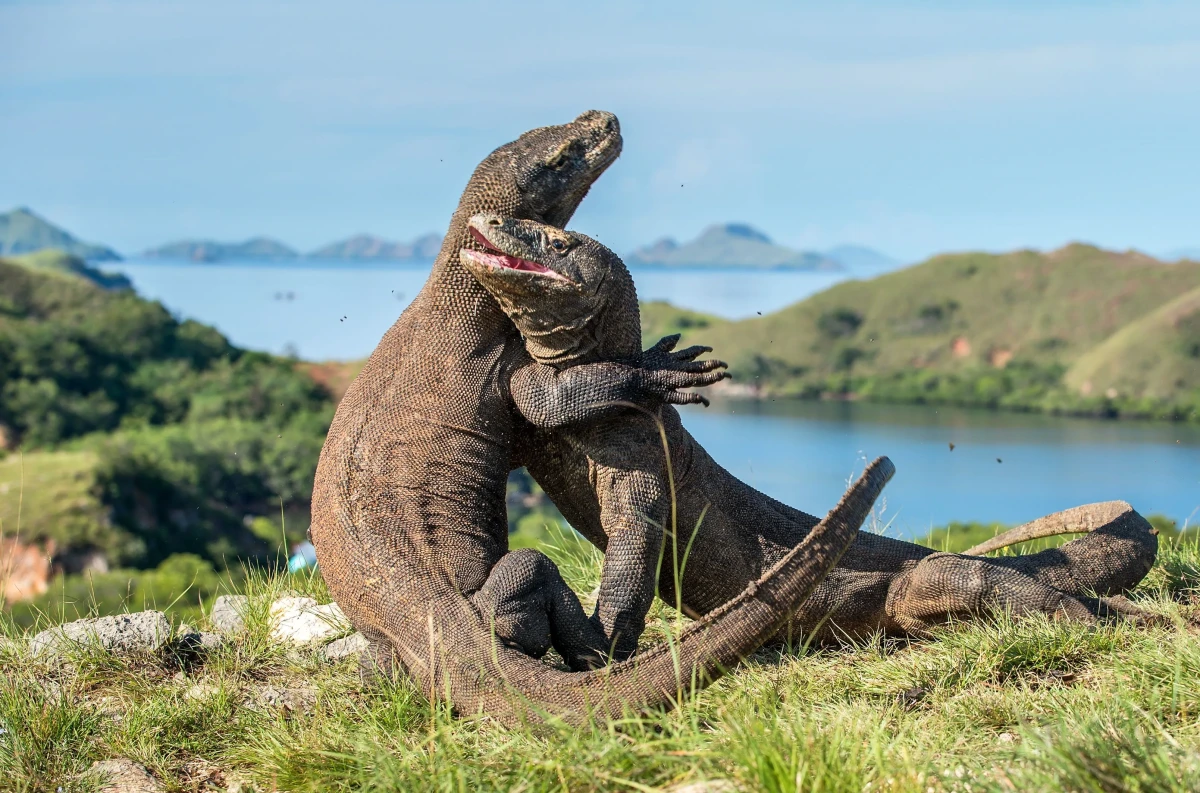
Komodo, the volcanic island of giant lizards, lies 320 miles (515 kilometres) east of Bali. Komodo is 25 miles (40 kilometres) long and 12 miles (19 kilometres) wide; its parched hills ascend to a height of 2,410 feet (734 metres). Komodo is home to a community of some 2000 people who make their living primarily from fishing. The island is the centrepiece of the Komodo National Park, where you will find the most tangible legacy left behind from the Jurassic Era. Komodo Island was little-known and the Komodo dragons were only a myth until the giant lizards were scientifically described in 1912 . Extinct almost everywhere else, the island attracts thousands of visitors from all over the world who come to see the Komodo dragons in their natural habitat. Komodo National Park has been declared a UNESCO World Heritage Site and Biosphere Reserve. The Komodo dragon’s great bulk and weight are its most unique characteristics; even hatchlings average 20 inches (51 centimetres) in length. The adult male can reach 10 feet (3 metres) and weigh up to 330 pounds (150 kilos). Females attain only two-thirds of this size, and lay up to 30 eggs at a time. With their saw-like teeth, these fierce creatures are able to rip apart a deer, goat or wild pig. The animals have an uncanny sense of smell, and are considered among the world's most intelligent reptiles. They are quite agile over short distances, and can move swiftly to capture their prey. The Indonesian Directorate of Nature Conservation (PPA) administers Komodo National Park. Park Rangers must escort all visitors; independent exploration of the park is not permitted.Day 19 Lamalera Village, Lomblem Island
Day 20 Kalabahi (for Takpala)
Kalabahi is the capital and main seaport of Alor Island the largest landmass in the Alor archipelago. Roughly 60 000 inhabitants call Kalabahi home and enjoy a wide variety of goods and services available here. Kalabahi has grown as a town in part because it is situated on some of the only level ground on the volcanic and rugged island of Alor. Inland from Kalabahi is the small traditional village of Takpala. The attractive rustic homes of the village are open and airy and the Abui people living here harvest dry roast and grind their coffee by hand. The traditional dances and welcome ceremonies express a close-knit society cultivated in this tranquil setting.Day 21 Kupang
Day 22 Day at sea
Days at sea are the perfect opportunity to relax unwind and catch up with what you’ve been meaning to do. So whether that is going to the gym, visiting the spa, whale watching, catching up on your reading or simply topping up your tan these blue sea days are the perfect balance to busy days spent exploring shore side.Day 23 Darwin
Australia's capital of the north is a uniquely tropical city, and a historically isolated outpost of this vast, diverse country. Reaching up towards the equator, a full 2,000 miles from Sydney and Melbourne, the city was named in honour of Charles Darwin by the British settlers who established a frontier outpost here. With a unique history, beautiful islands nearby, and a palette of sizzling Pacific flavours, colourful Darwin is an enchanting and exotic Australian destination. Crocodiles patrol the jungled waterways and tropical rainforests around Australia's gateway to the Top End. Explore via airboat to look down on the veiny waterways of the mist-laced Kakadu National Park. The sounds of chattering birdlife and the gentle splash of fountains and waterfalls will fill your ears in George Brown Darwin Botanic Gardens. Soak it all in, before kicking back and relaxing with a picnic and a crackling barbecue. The sunshine and famous tropical pink sunsets mean many visitors naturally gravitate to the city's soft sands to relax at spots like pretty Mindil Beach, as evening approaches. The adjoining market is filled with souvenirs and crafts stands and is the perfect great place to enjoy some fiery Asian flavours. Stroll the stalls, grab some food, and crack open an ice-frosted beer as the sunset show begins. It may be remote, but Darwin found itself on the front line during the Pacific War, as the Japanese air force unloaded their bombs onto the city in 1942. This relaxed unassuming city has a deeply resilient backbone, however, and you can explore the museums to learn more of the war's impact on Darwin, as well as the devastating effects of one of Australia's worst natural disasters, Cyclone Tracy in 1973.Terms and Conditions Terms and Conditions apply: All prices are quoted in Australian dollars, based on per person double occupancy unless stated otherwise, and inclusive of all taxes and discounts. All prices & itineraries are current as of 12 March 2026 & subject to change without notice. Prices are subject to change due to availability, currency fluctuations, fuel price, and tax increases. Oceanview and Balcony cabins may have obstructed views, please check with your consultant. From price based on Vista suite, Veranda Sutie and Medallion Suite. Savings based on Medallion Suite compare to Silversea's retail fare $56,000 per person as on 12 March 2026. Price includes any stated bonus nights, upgrades & package savings, if applicable. All passports, visas, travel permits, and vaccinations are the responsibility of the travelling passenger to secure prior to travel. Airfares are capacity controlled and are subject to change at any time without notice, based in economy class from Sydney and are subject to the carriers' flight schedules and conditions. Seasonal and flight routing surcharges may apply. Airfares are based on the lowest available fare, which comes with strict conditions i.e., non-refundable, or non-changeable. Please ask your consultant for pricing on flexible fare options that allow cancellations and/or amendments at a fee. Please call us for prices from other airports. Travel packages advertised may include multiple products provided by several suppliers to provide a travel itinerary. Each component of the package will be treated independent of each other, and the specific terms & conditions of each product supplier will apply. Hotels may charge resort fees, or a security bond not included or mentioned in this package, payable direct upon check-in. We reserve the right to correct errors without penalty.
Dragons, Reefs & Remote Shores
Includes:- Cruise
- Flights
- Hotel
- Transfers
